

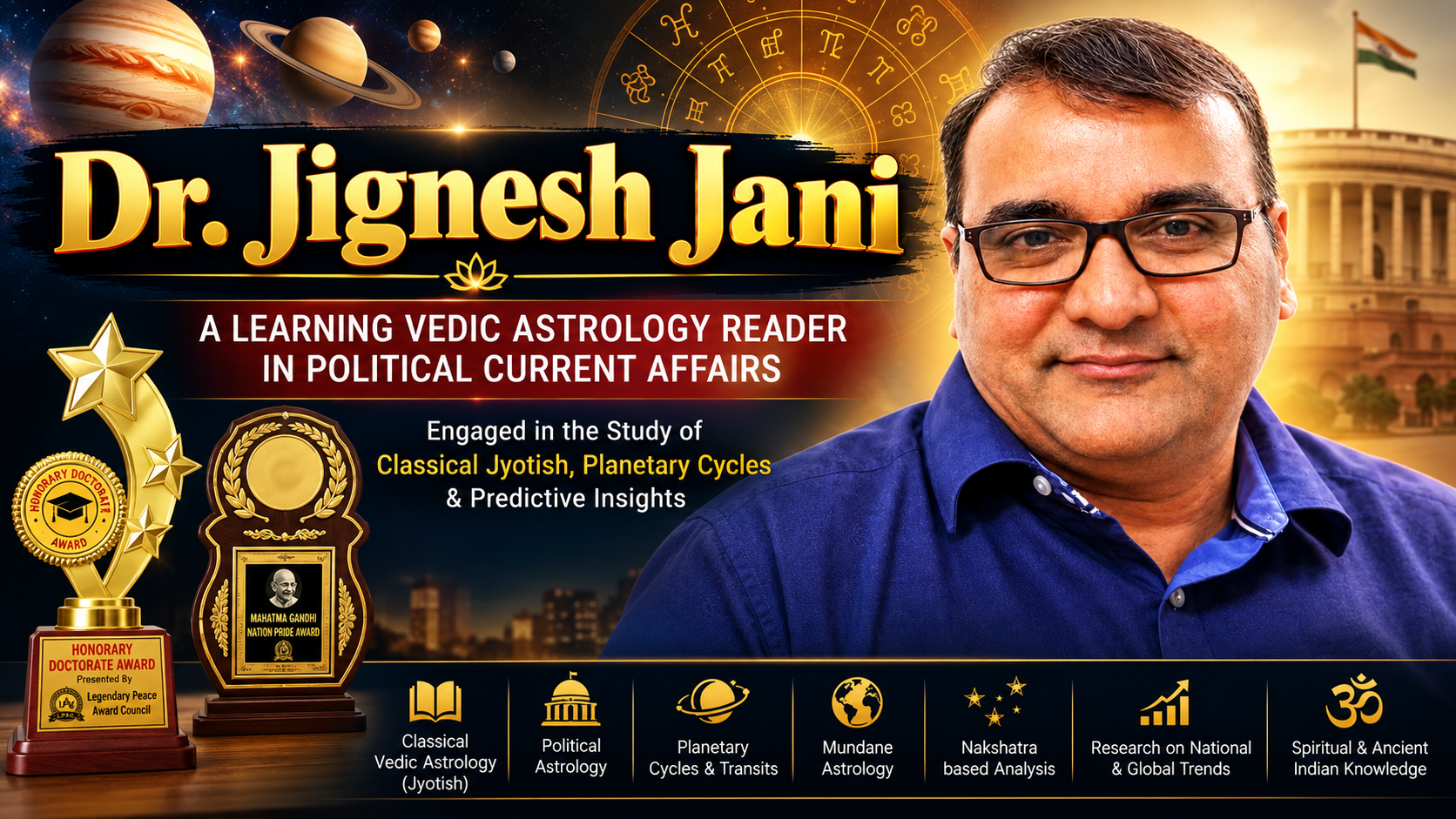
By Dr. Jignesh Jani
The emerging diplomatic understanding between the United States and Iran represents more than another chapter in Middle Eastern politics. It reflects a broader transformation in the way global power is exercised. Today’s international order increasingly rewards negotiation, institutional balance, and strategic calculation over military escalation.
For much of the past year, fears of direct conflict between Washington and Tehran dominated international discussions. Financial markets reacted to uncertainty, governments reviewed security strategies, and observers debated possible military scenarios. Yet diplomacy ultimately prevailed, illustrating that political realities often impose limits where military capability alone cannot.
The American constitutional framework plays an important role in this process. Although the President serves as Commander-in-Chief, authority over sustained military engagement is shared with Congress through funding, oversight, and legislative approval. This balance of power was intentionally designed to ensure accountability in decisions involving war.
Beyond constitutional considerations, domestic economic pressures have strengthened the incentive for diplomacy. High public debt, concerns about government spending, and limited public support for another extended overseas conflict have narrowed the political space for military escalation.
The international implications are equally significant. Reduced tensions in the Persian Gulf support greater stability in global energy markets and may benefit countries dependent on imported crude oil. Washington also gains greater flexibility to focus on strategic priorities in the Indo-Pacific, where long-term competition with China continues to shape global security policy.
The evolving diplomatic environment may also alter regional geopolitical relationships by reducing dependence on traditional alignments and encouraging broader international engagement.
The most important lesson, however, is philosophical rather than political. Modern power is no longer measured solely by military capability. It increasingly depends on institutions, economic resilience, diplomatic credibility, and public legitimacy.
The Iran understanding reminds us that sustainable peace rarely emerges from coercion alone. In an interconnected world, dialogue, constitutional governance, and strategic restraint have become essential components of effective leadership. That may ultimately prove to be the agreement’s most enduring legacy.